Facebook’s Helping to Integrate Cashless Society with Cell Phones
Facebook Inc is getting ready to help perpetuate the coming cashless society by joining the mobile-payments race with remittances and electronic-money services on the social network, the Financial Times reported on Sunday.
The company is waiting to obtain approval from the Central Bank of Ireland so that they can start financial services in the Europe Union that would allow users to store digital fiat currency on the Facebook network. So essentially users in European countries could use their Facebook accounts on their smartphones to transfer money to people or make payments to people through a process called “passporting”.
Passporting makes it so businesses could conduct operations in the European Economic Area (EEA) under a single market directive This would allow and enable Facebook’s credit institution to reach multiple markets. Armed with this classification, Facebook would be able to receive monetary deposits from the public and grant credits for its accounts anywhere in the EEA.
Facebook’s specific plans, including which other countries the electronic-money services would be available in, are not entirely clear but as mentioned earlier Facebook is awaiting regulatory approval as an e-money provider from the Central Bank of Ireland to have it in the EU, which is said to be weeks away.
Facebook had partnership talks with TransferWise, Moni Technologies and Azimo — that offer online and mobile international money transfers.
According to sources, Facebook offered mobile remittance firm Azimo $10 million to hire one of its co-founders as a director of business development. The social networking firm did not comment.
Transferwise is backed by Peter Thiel’s Valar Ventures who also was an early investor in Facebook.
“Facebook wants to become a utility in the developing world, and remittances are a gateway drug to financial inclusion,” said a source familiar with Facebook’s strategy.
Money transfer would also represent an additional revenue stream on top of advertising for the company.
The likes of Azimo are trying to build market share by undercutting traditional money transfer players such as Western Union on fees.
The money transfer project is led by Sean Ryan (pictured), Facebook’s vice-president of platform partnerships.
This is not the first instance of using Facebook as a P2P money service. India’s ICICI Bank has launched a banking app that enables customers to carry out a range of services, including sending money to other users of the social network.
Facebook already has some exposure to financial services in the US where it has authorisation so that it can process payments for developers who charge users for in-app purchases.
~ www.mobileworldlive.com
Is This a Threat to Decentralized Crypto-currencies?
“…With the price of bitcoin trending upwards on the CoinDesk Bitcoin Price Index, the digital currency market is once again showing resilience, even in the face of controversial news from the People’s Bank of China (PBOC) and the Internal Revenue Service (IRS).
However, while these events saw major government agencies attempting to limit how funds could be handled by bitcoin businesses and imposing accounting requirements on bitcoin users, a new report has suggested that bitcoin could soon face another threat, this time in the form of viable competition that could hinder adoption in the short term…”
Is the Cell Phone the Real Mark of the Beast?
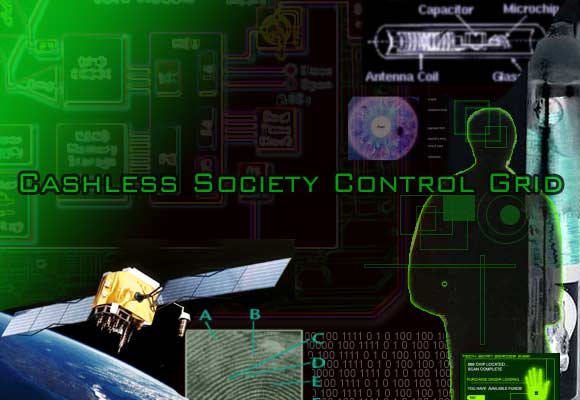
Not too much off topic— but for years now people labelled as conspiracy theorist, have warned the public about RFID chip implants under human skin that will be mainly used as digital currency and citizen identification with GPS capabilities that will control, track and store everything of that persons life. Christians refer to it as the Mark of the Beast.
There is so much hype about the RFID chip implantation because it is a reality and there is also a growing trend of human beings accepting this crazy idea of chip implantation that is being perpetuated all around the world. It is being sold to the public in more ways than one,including using it to digitally unlock doors.
Filmmaker Aaron Russo exposed a conversation he had with Nick Rockefeller (big oil, big pharma and big banker family) to Alex Jones of Infowars. Nick Rockefeller told him the banker elite have a biometric agenda that involves perpetuating a surveillance society eliminating paper and coin currency. Part of the plan is to have all humans use RFID chip implants for legal identification and to store and use digital currency. This way the elite have full surveillance and control of the money supply
People fail to realize how much of a surveillance society they live under and that most of the population has already been chipped but the chips are not under their skin but in their pockets. Debit & credit cards, drivers licences, GPS devices in the car and a lot more all contain RFID chips in them but most importantly cell phones.
Comparing Cell Phone to endgame Banker Elite RFID Chip Implantation Idea:
- A cell is a number identifying a citizen (usually registered to their legal name/identity)
- A cell phone has a GPS RFID chip in it
- People use their cell phones to store their entity on social networks as well as on hard drive or memory cards
- Biometrics are being integrated with cell phones
- More and more people are using cell phones for digital currency
Does Aaron Russo’s statements have any truth to it? Apple Chief Executive Tim Cook said in January the company’s interest in mobile payments was a reason for creating the biometric Touch ID fingerprint sensor in its iPhone 5S smartphone.
So is Facebook helping to perpetuate this agenda as well? If Facebook’s mobile electronic payments and money transfers take off globally it would slowly inevitably condition the masses to be inclined to use their virtual identity accounts to make electronic payments through their cell phone which contains an RFID chip. Essentially it could help future generations to accept the idea of implanting chips under their skin.